
Introduction
We’ve all been there — standing in the kitchen after a long day, staring at the fridge, wondering what to eat that’s quick, healthy, and actually tastes good. Between endless diet trends, conflicting advice, and busy schedules, food can start to feel complicated or even stressful. But it doesn’t have to be this way.
Healthy eating isn’t about perfection, restriction, or following the latest fad. It’s about building a positive, sustainable relationship with food that nourishes your body and brings joy to your table. When we focus on nutritious meals, smart cooking strategies, and simple sustainable habits, eating well becomes an enjoyable part of everyday life rather than a chore.
This complete guide will walk you through practical, realistic ways to create balanced meals, cook smarter, eat more mindfully, and develop habits that last. Whether you’re feeding a family, cooking for one, or simply want to feel better in your body, these principles are flexible enough for any lifestyle.
The Foundations of Healthy Eating
At its core, healthy eating is about giving your body the nutrients it needs while enjoying what you eat. This means prioritizing a variety of whole foods — vegetables, fruits, whole grains, lean proteins, healthy fats, and legumes — while allowing room for treats and flexibility.
Key foundations include:
- Balance: Combining different food groups for steady energy and satisfaction.
- Variety: Eating a rainbow of colors to ensure a wide range of vitamins, minerals, and antioxidants.
- Moderation: Focusing on how food makes you feel rather than labeling foods as “good” or “bad.”
Nourishing your body consistently supports everything from better energy and mood to stronger immunity and long-term wellness. The goal isn’t to overhaul your diet overnight but to make small, meaningful improvements that feel natural.
Balanced Meal Planning Made Simple
Good meal planning removes the daily “what’s for dinner?” stress and helps you eat more nutritiously without extra effort.
Start by planning a few meals ahead each week. Focus on building balanced plates using this simple formula:
½ vegetables or fruit + ¼ protein + ¼ complex carbohydrates + a source of healthy fat.
Practical Meal Planning Tips:
- Batch cook staples like grains, roasted vegetables, or proteins on weekends.
- Keep a flexible shopping list with seasonal produce and pantry basics.
- Prep grab-and-go options like overnight oats, chopped veggies, or homemade trail mix for busy days.
- Use theme nights (Meatless Monday, Stir-Fry Friday) to make decisions easier.
When grocery shopping, shop the perimeter of the store first (produce, proteins, dairy) and fill in with pantry items. This approach saves time, reduces waste, and keeps nutritious meals within reach.
Smart Cooking Techniques and Healthy Recipes
You don’t need fancy equipment or chef skills to cook healthy, delicious meals. Simple techniques can maximize flavor and nutrition while minimizing time.
How to Build a Balanced Plate (15-Minute Formula):
- Choose a protein (chicken, fish, tofu, beans, eggs).
- Add plenty of colorful vegetables (fresh or frozen both work great).
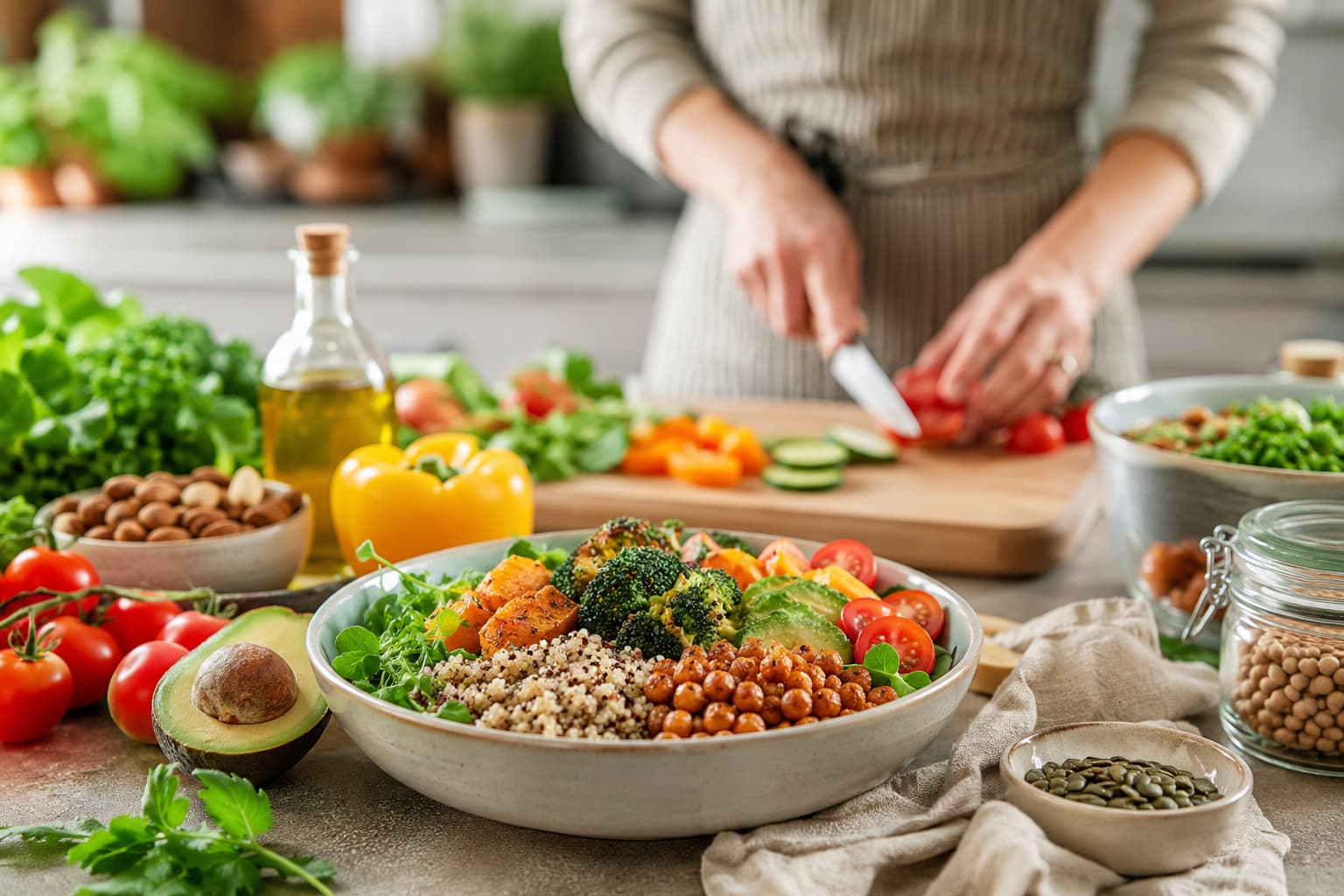
- Include a satisfying carbohydrate (quinoa, sweet potato, brown rice, whole-grain pasta).
- Finish with healthy fat (avocado, olive oil, nuts, seeds).
- Season generously with herbs, spices, garlic, lemon, or chili for flavor without extra calories.
Easy Recipe Ideas You’ll Actually Make:
- One-Pan Mediterranean Chicken: Roast chicken thighs with cherry tomatoes, olives, zucchini, and feta. Drizzle with olive oil and herbs.
- Veggie-Packed Stir-Fry: Sauté mixed vegetables and tofu or shrimp in ginger-garlic sauce, served over cauliflower rice or brown rice.
- Nourishing Bowl Template: Base of greens + protein + roasted veggies + avocado + crunchy toppings like seeds or nuts. Dress with tahini or olive oil vinaigrette.
These meals come together quickly, taste satisfying, and provide steady energy.
Portion Awareness and Mindful Eating
Portion awareness isn’t about strict measuring — it’s about learning what feels good in your body. Use your hand as a rough guide: a palm-sized portion of protein, a fist of vegetables, a cupped hand of carbs, and a thumb of healthy fats.
Mindful eating takes this further by encouraging you to slow down and pay attention. Eating without screens, chewing thoroughly, and noticing flavors and textures can help you enjoy meals more and naturally recognize fullness cues.
Mindful Eating Practice:
- Sit down at a table without distractions.
- Take three deep breaths before starting.
- Put your fork down between bites.
- Ask yourself halfway through: “Am I still hungry or am I satisfied?”
This simple shift can reduce overeating and increase satisfaction from smaller portions.
Special Dietary Approaches and Seasonal Ingredients
There’s no single “perfect” way of eating. Flexible approaches like Mediterranean-style eating (emphasizing vegetables, olive oil, fish, and legumes) or plant-forward meals work well for many people. The key is choosing what feels sustainable and nourishing for your body and lifestyle.
Cooking with seasonal ingredients brings better flavor, higher nutrient content, and often lower costs. In summer, enjoy fresh berries, tomatoes, and leafy greens. In winter, turn to hearty roots, squash, and citrus. Farmers’ markets or local produce boxes are wonderful ways to stay connected to what’s in season.
Hydration, Sustainable Food Habits, and Overcoming Challenges
Don’t overlook hydration — drinking enough water supports energy, digestion, and even appetite regulation. Aim for consistent intake throughout the day, flavoring with lemon, cucumber, or herbs if plain water feels boring.
Sustainable food habits include reducing waste by planning meals, using leftovers creatively, and choosing foods with a lower environmental impact when possible (more plants, less ultra-processed items).
Setbacks are normal. If you have an off week, gently return to your habits without self-criticism. Focus on progress over perfection.
Sustainable Habits Checklist:
- Plan 3–4 meals per week instead of all seven.
- Keep healthy snacks visible and easy to grab.
- Cook one new recipe each week to keep things interesting.
- Involve family or roommates in meal prep for shared responsibility.
Conclusion
Healthy and enjoyable eating comes down to balance, practicality, and kindness toward yourself. By focusing on nutritious meals, smart cooking techniques, mindful eating, and sustainable habits, you create a way of eating that supports your health for years to come — without feeling deprived.
Start small this week: try planning just a few balanced meals, experiment with one new recipe, or practice mindful eating during dinner. Pay attention to how you feel when you nourish your body well. Over time, these choices become second nature and genuinely pleasurable.
Food is more than fuel — it’s connection, culture, comfort, and celebration. Embrace it fully. Your body and future self will thank you for building a healthier, happier relationship with eating that lasts.