Introduction: Why Great Design Never Goes Out of Style
A beautifully designed home is not defined by expensive furniture or the latest decorating trends. Instead, it is built on strong interior design principles that create spaces which feel comfortable, functional, and visually balanced for years to come.
Whether you own a large family home, rent a city flat, or simply want to refresh one room, understanding the foundations of home interior design helps you make smarter decisions. Good design improves how a space looks while making everyday activities easier and more enjoyable.
From thoughtful room layout ideas and effective colour theory to practical interior lighting, these timeless concepts work in every style of home. By focusing on lasting design principles instead of short-lived fashions, you can create interiors that remain attractive, practical, and easy to update over time.
Understanding Scale and Proportion
Scale refers to the size of objects in relation to a room, while proportion describes how different items relate to one another. Together, they form one of the most important interior design principles.
A room feels comfortable when furniture, accessories, and architectural features work in harmony.
Practical Examples
Small apartment living room
Choose a compact sofa with slim arms instead of oversized seating. A round coffee table often improves movement and keeps the room feeling open.
Compact bedroom
Select bedside tables that match the height of the mattress and avoid bulky wardrobes that dominate the room.
Open-plan family space
Use larger furniture pieces to define different zones while maintaining consistent proportions across the entire area.
Common Mistakes
- Oversized furniture in small rooms
- Tiny rugs floating beneath furniture
- Decorative accessories that are either too large or too small
Simple Solutions
- Measure every room before buying furniture.
- Leave clear walkways throughout the space.
- Choose rugs large enough to sit beneath the front legs of seating.
Creating Balance in Every Room
Visual balance helps a room feel calm and organised. It distributes visual weight evenly throughout the space.
Symmetrical Balance
This approach places matching furniture or décor on both sides of a central point.
Best suited for:
- Formal living rooms
- Traditional dining rooms
- Master bedrooms
Example: Matching armchairs positioned on either side of a fireplace.
Asymmetrical Balance
Rather than identical objects, different items with similar visual weight create balance.
Ideal for:
- Contemporary interiors
- Relaxed family homes
- Creative spaces
Example: A large sofa balanced by two smaller chairs and a floor lamp.
Radial Balance
Furniture is arranged around a central feature.
Works well in:
- Circular dining areas
- Conversation spaces
- Entrance halls
Example: Chairs arranged around a round dining table or coffee table.
Designing Around a Strong Focal Point
Every successful room benefits from a clear focal point that naturally draws attention.
Common focal points include:
- Fireplace
- Large window
- Statement artwork
- Feature wall
- Distinctive furniture piece
Once the focal point is established, arrange furniture to support it rather than compete with it.
Avoid introducing several equally dominant features, as they can make a room feel cluttered and confusing.
Using Colour Theory to Create the Right Atmosphere
Understanding colour theory allows you to influence mood and improve room functionality.
Warm Colours
Reds, oranges, and warm yellows create energy and encourage conversation.
Best for:
- Living rooms
- Dining rooms
- Social spaces
Cool Colours
Blues, greens, and soft greys encourage relaxation.
Ideal for:
- Bedrooms
- Bathrooms
- Reading corners
Neutral Colour Schemes
Whites, creams, taupes, and greys provide flexibility and support timeless home design.
Neutral spaces can easily evolve with seasonal accessories.
Accent Colours
Accent colours introduce personality without overwhelming the room.
Use them through:
- Cushions
- Artwork
- Rugs
- Decorative accessories
Colour Planning Framework
- Choose one dominant colour.
- Select one complementary secondary colour.
- Add one or two accent colours.
- Repeat colours consistently throughout the room.
Examples:
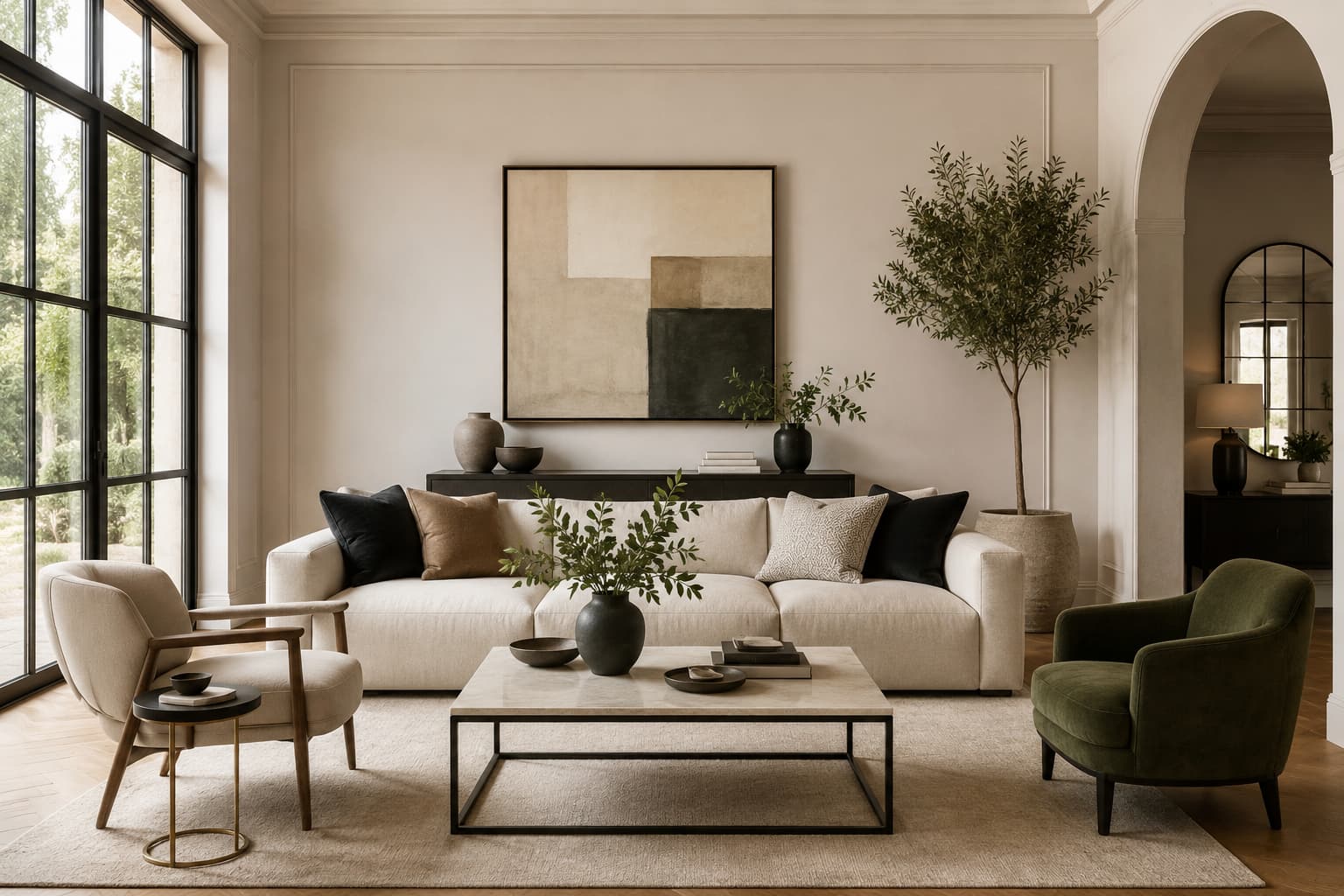
- Living room design: Warm neutrals with deep green accents.
- Bedroom: Soft blues paired with natural timber.
- Home office: Calm greys with energising mustard accents.
- Kitchen: White cabinetry with natural wood and black details.
The Power of Lighting Design
Lighting influences mood, productivity, and comfort more than many people realise.
The best interiors combine three layers of lighting.
Ambient Lighting
Provides general illumination.
Examples include:
- Ceiling lights
- Recessed lighting
- Pendant fixtures
Task Lighting
Supports specific activities.
Examples include:
- Desk lamps
- Reading lights
- Under-cabinet kitchen lighting
Accent Lighting
Highlights architectural details or decorative features.
Examples include:
- Wall lights
- Picture lights
- Shelf lighting
Even modest budgets can benefit from layered lighting by combining ceiling fixtures with table lamps and floor lamps.
Layering Textures for Depth and Warmth
Texture adds richness even when using simple colour palettes.
Combine different materials such as:
- Natural wood
- Stone
- Linen
- Wool
- Cotton
- Metal finishes
- Glass
- Woven baskets
Layering textures creates interest without relying on bold colours.
For example, a neutral sitting room can include:
- Timber flooring
- Wool rug
- Linen curtains
- Velvet cushions
- Ceramic accessories
The result feels inviting without becoming cluttered.
Applying Design Principles to Different Spaces
Small Apartments
Effective small space design focuses on flexibility.
Helpful ideas include:
- Multi-functional furniture
- Wall-mounted storage
- Vertical shelving
- Mirrors to reflect light
- Fold-away dining tables
Family-Friendly Living Rooms
Practicality should guide living room design.
Prioritise:
- Durable fabrics
- Comfortable seating
- Hidden storage
- Flexible layouts
- Easy cleaning
Home Offices and Workspaces
Successful workspace design supports concentration.
Focus on:
- Ergonomic seating
- Natural daylight
- Organised storage
- Minimal distractions
- Adjustable task lighting
Creating a Mood Board Before You Decorate
Planning reduces expensive mistakes and creates more cohesive interiors.
Before making purchases, gather inspiration using photographs, colour samples, and material swatches.
Mood Board Creation Prompt
Style
Modern, traditional, Scandinavian, rustic, coastal, industrial, or classic.
Colours
Choose your primary, secondary, and accent colours.
Materials
Wood, stone, glass, metal, fabric, or natural fibres.
Furniture
Identify essential items before decorative accessories.
Lighting
Plan ambient, task, and accent lighting.
Functionality Goals
Decide how the room should support everyday living.
This planning process helps maintain consistency throughout your home styling project.
A Simple Before-and-After Design Framework
Before
- Identify current problems.
- Measure every wall and doorway.
- Define the room’s primary purpose.
During
- Establish the focal point.
- Select a balanced colour palette.
- Improve lighting.
- Introduce layered textures.
- Optimise furniture placement.
After
- Review visual balance.
- Remove unnecessary items.
- Adjust accessories gradually.
Example Transformation
A cramped spare bedroom becomes a productive home office by replacing oversized furniture with a compact desk, adding layered lighting, introducing vertical shelving, and using soft neutral colours to increase the sense of space.
How Each Design Principle Improves Your Space
Understanding how each principle influences a room makes it easier to create interiors that are both attractive and practical.
- Scale and Proportion: Ensures furniture and décor fit the size of the room, creating a comfortable and harmonious environment.
- Visual Balance: Distributes visual weight evenly throughout the space, making rooms feel organised, calm, and inviting.
- Focal Points: Gives the eye a natural place to rest, helping the room feel purposeful and well planned.
- Colour Theory: Influences mood, enhances functionality, and can make rooms appear larger, brighter, warmer, or more relaxing.
- Layered Lighting: Combines ambient, task, and accent lighting to improve comfort, visibility, and the overall atmosphere.
- Layered Textures: Introduces depth, warmth, and visual interest by combining materials such as wood, fabric, stone, metal, and natural fibres.
- Functional Layout: Supports everyday activities by improving movement, accessibility, and the practical use of available space.
- Thoughtful Design Planning: Reduces costly mistakes and helps create a cohesive, timeless interior that reflects your needs and personal style.
Common Interior Design Mistakes to Avoid
Many decorating problems stem from simple planning errors.
Buying Furniture Before Measuring
Always measure rooms, doorways, and furniture before purchasing.
Ignoring Lighting
Add multiple light sources instead of relying on one ceiling fixture.
Following Trends Too Closely
Choose classic foundations and update accessories instead.
Overcrowding Rooms
Leave enough open space for comfortable movement.
Neglecting Functionality
Every design decision should support daily living.
Using Too Many Colours
Limit your palette to maintain cohesion.
Poor Furniture Placement
Arrange seating to encourage conversation while keeping clear walking routes.
Conclusion: Design for the Way You Live
The best interior design principles remain relevant regardless of changing fashions because they focus on how people experience their homes every day. By considering scale and proportion, creating balanced interiors, using thoughtful colour schemes, improving interior lighting, layering textures, and planning each room carefully, you can create spaces that are both beautiful and practical.
Whether you’re redesigning a single room or planning an entire home, lasting success comes from making intentional choices that suit your lifestyle rather than following temporary trends. Thoughtful planning, functional layouts, and timeless design concepts will continue to enhance your home for many years, creating spaces that are welcoming, adaptable, and truly enjoyable to live in.