
Introduction
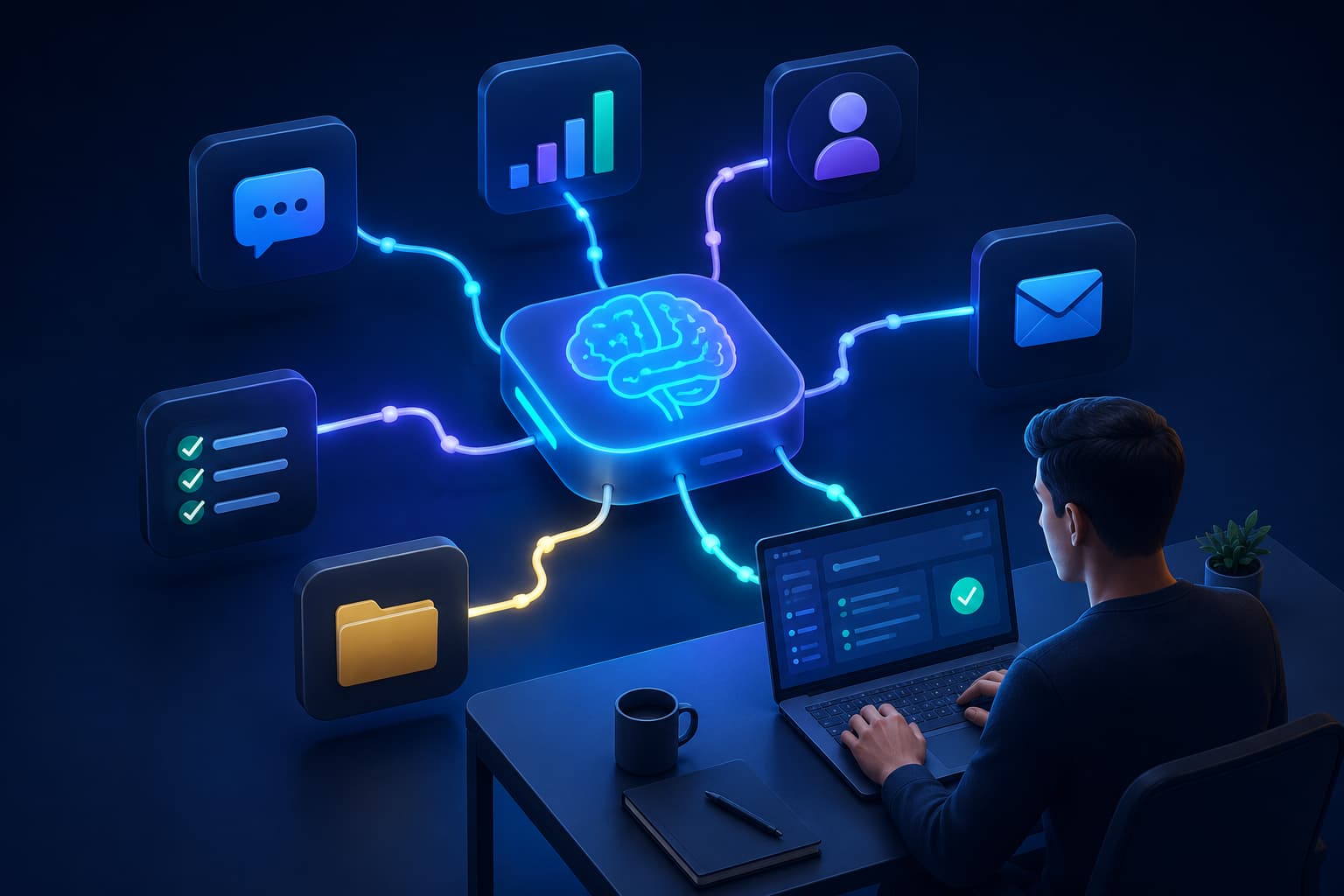
Many organisations try AI as a quick experiment — a flashy demo or an occasional productivity hack — and then wonder why adoption stalls. The difference between occasional AI use and dependable, AI-powered workflows is systems: repeatable prompts, defined inputs and outputs, and human review steps. Turning AI from novelty to a reliable business tool requires practical design, clear expectations and small, measurable wins that teams can incorporate into daily routines.
Why Most AI Experiments Fail to Deliver Lasting Results
AI pilots trip up for predictable reasons: no clear objectives, inconsistent prompting, poorly designed processes, weak quality control and an overreliance on raw AI outputs. Resistance to change and lack of measurable outcomes compound the problem. Successful AI adoption treats automation as part of a workflow system, not a one-off stunt — it needs standards, oversight and visible benefit to stick.
Identifying the Right Tasks for AI Automation
Look for tasks that are:
- Repetitive and process-driven
- Time-consuming and high-volume
- Low-risk or easily reversible
Good examples: drafting content outlines, summarising documents, categorising data, generating meeting notes, drafting routine emails, scheduling and customer-support triage. Tasks that still need strong human input include strategic decisions, legal reviews, sensitive communications, brand reputation issues and high-stakes customer interactions.
Creating AI-Powered Workflows That Employees Actually Use
Design workflows that slot into existing habits and produce reliable results.
Standardised Prompts
Shared prompt templates reduce variability and training time. Examples:
- Writing: “Produce a 400-word blog outline on X, with headings, target audience and five SEO keywords.”
- Research: “Summarise the main findings of this document into five bullet points with sources.”
- Data cleaning: “Normalise these entries to UK address format and flag uncertain matches.”
- Meeting summaries: “List decisions, action owners, deadlines and follow-up items.”
- Customer communication: “Draft a friendly response acknowledging the issue and proposing next steps.”
Store templates centrally and version them as you refine language and outputs.
Clear Input and Output Expectations
Define required inputs (documents, datasets, context) and output formats (CSV, bullet list, draft email). Specify approval steps and quality standards so users know when AI output is final or requires review.
Human Review Checkpoints
Place checkpoints where human judgement matters: final edits, legal or compliance sign-off, and customer-facing messages. This preserves accountability and prevents errors from propagating.
Role-Based Examples of Effective AI Workflows
Marketing Teams
Content ideation, SEO research, social calendar drafting and first-draft copy generation with human editing for tone and brand fit.
Operations Teams
Process documentation, weekly report generation, workflow monitoring alerts and knowledge-base updates.
Developers and Technical Teams
Code documentation, test-case generation, debugging suggestions and concise technical summaries for non-technical stakeholders.
Small Business Owners
Drafting client emails, generating proposals, templating invoices, automating appointment scheduling and basic customer replies.
When AI Should Assist Rather Than Decide
Maintain human oversight for accuracy, ethics and customer trust. Use AI for speed, drafting, summarisation, classification and pattern recognition. Use humans for judgement, accountability, creativity, relationship management and final approvals. This division keeps responsibility clear and safeguards brand integrity.
Simple Governance Rules for Safe and Consistent AI Use
- Don’t share sensitive data unnecessarily.
- Verify facts that affect customers or legal obligations.
- Document approved workflows and prompt templates.
- Keep version control for prompts and outputs.
- Define brand tone and quality checks.
- Review outputs regularly and log issues.
- Train staff on responsible AI use.
As AI-powered search and answer engines become another way people discover information, organisations should also consider whether their expertise is being interpreted and cited accurately beyond traditional search results. Industry specialists such as Megrisoft note that periodic AI visibility audits and responsible citation monitoring can complement internal AI governance by helping businesses understand how their content and brand are represented across emerging AI search experiences.
Lightweight governance that supports teams is usually more effective than heavy-handed bans that push usage underground.
AI Workflow Audit Checklist
Task Assessment
- Is the task repetitive?
- Is the process predictable?
- Does it consume significant time?
- Is the risk manageable?
Workflow Readiness
- Are inputs defined?
- Is there a prompt template?
- Is a review step in place?
- Can results be measured?
Success Indicators
- Time saved
- Reduced errors
- Improved consistency
- Faster turnaround
- Better employee experience
Building AI Habits Instead of Chasing AI Trends
Focus on consistency, measurable outcomes and incremental improvement. Start with one repeatable workflow, measure time saved or error reduction, refine prompts and governance, then expand. Small, well-governed automations often deliver more lasting value than ambitious, unfocused AI projects.
Conclusion
Sustainable AI adoption is less about chasing the latest model and more about embedding AI into disciplined workflows. With standardised prompts, clear inputs and outputs, human checkpoints and lightweight governance, organisations can convert AI hype into habitual productivity gains. Start small, measure impact and scale what demonstrably saves time or improves quality — that’s how AI becomes a dependable part of daily work.